Winter heating: what tenants are entitled to in Barrie and Simcoe County
In Ontario, landlords must keep the heat working in winter. Learn the minimum temperature, who pays and what to do if your home is cold.
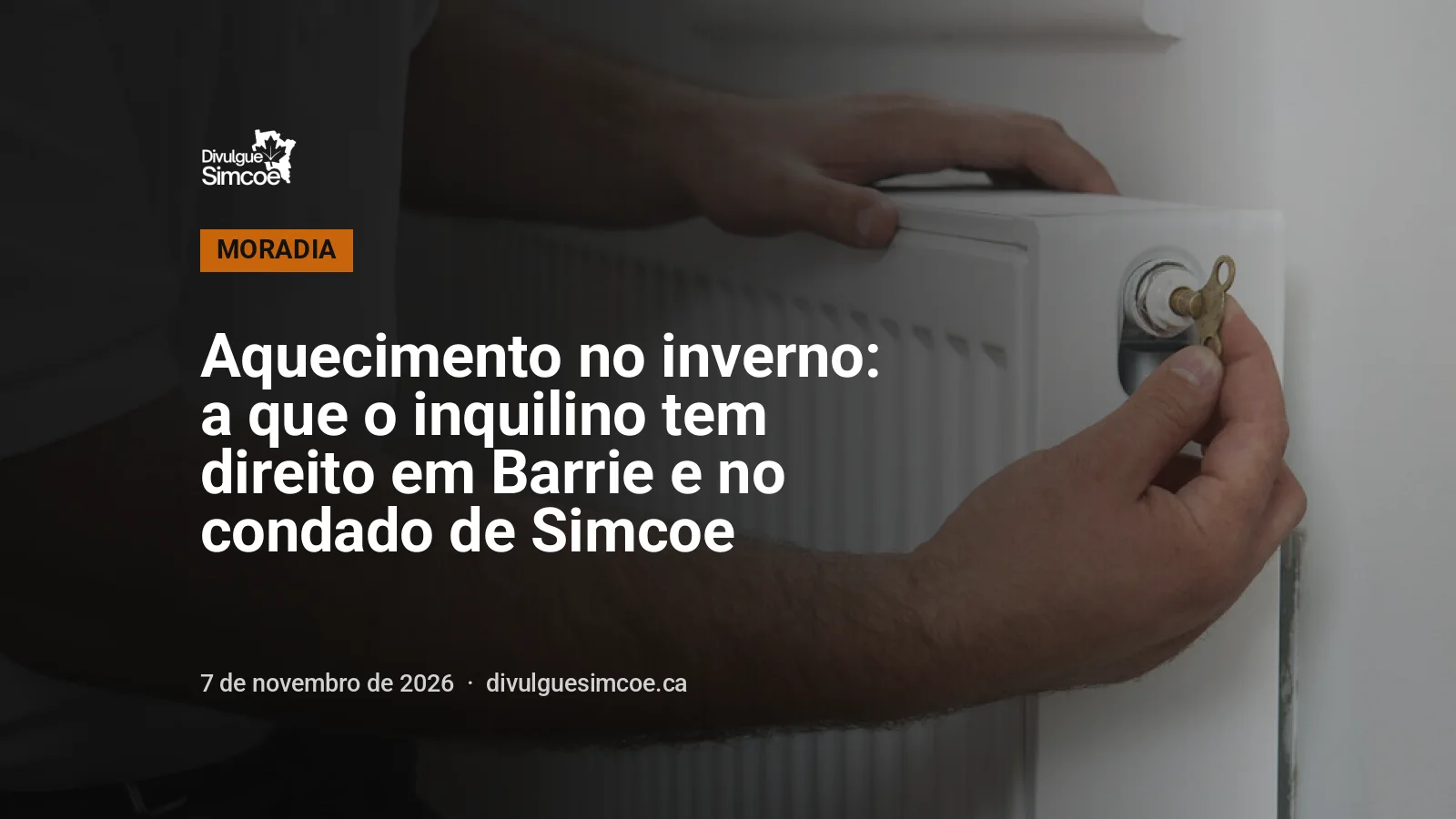
November is here and, with it, the first nights below zero in Simcoe County. If you rent a house, basement or apartment, now is the time to check that your heating works and to understand your rights. In Ontario, adequate heat is considered a vital service, and a landlord cannot simply leave a unit cold.
What the minimum temperature is
The provincial maintenance standard, which applies where a municipality has no rule of its own, requires landlords to keep a minimum temperature of 20 °C in all habitable rooms from September 1 to June 15, when the landlord supplies or controls the heat. Bathrooms, bedrooms, living room and kitchen are included.
Many municipalities, such as Barrie and Orillia, have their own property standards by-law, which may set specific dates and rules. Check the by-law on your city's website or ask the municipal by-law enforcement office.
Who pays for heat?
It depends on your lease. Ontario's Standard Lease includes a section showing who pays for gas, electricity and water. Even when the tenant pays the bill, the landlord is still responsible for keeping the furnace, heaters and electrical system working. A landlord also cannot shut off heat to pressure a tenant to leave or to pay a debt.
What to do if your home is cold
- Measure the temperature in different rooms and at different times, and write it down or photograph the thermometer.
- Notify your landlord in writing (email or text), describing the problem and asking for a repair by a deadline.
- If nothing is done, call your city's by-law enforcement. In Barrie, contact Service Barrie. An officer can inspect the unit and issue a repair order.
- If the problem continues, you can file an application with the Landlord and Tenant Board (LTB) to require repairs and, in some cases, a rent abatement.
- Don't withhold rent on your own, as this can become grounds for eviction.
Winter safety
Portable electric heaters help in an emergency, but use them carefully: keep them away from curtains and clothing and never plug them into cheap extension cords. Never use a stove, barbecue or generator to heat your home. In Ontario, every home with a fuel-burning appliance (gas furnace, fireplace, gas water heater) or an attached garage must have a carbon monoxide alarm near sleeping areas, as well as smoke alarms on every storey. In rental units, installing and maintaining these alarms is the landlord's responsibility. Test them once a month.
Tip if you're looking for a place
Before signing a lease, ask what type of heating the unit has, how much the winter bill usually costs and when the furnace was last serviced. Basements tend to be colder: check that every room has a heat vent and that windows close properly.
Need help with this? See realtors and real estate agencies in the guide, with the language of service on each profile.