Winter driving in Simcoe: winter tires, a snow-free car and an emergency kit
Lake effect snow gives Simcoe County some of Ontario's toughest winter roads. Here's how to get your car ready and what the law requires.
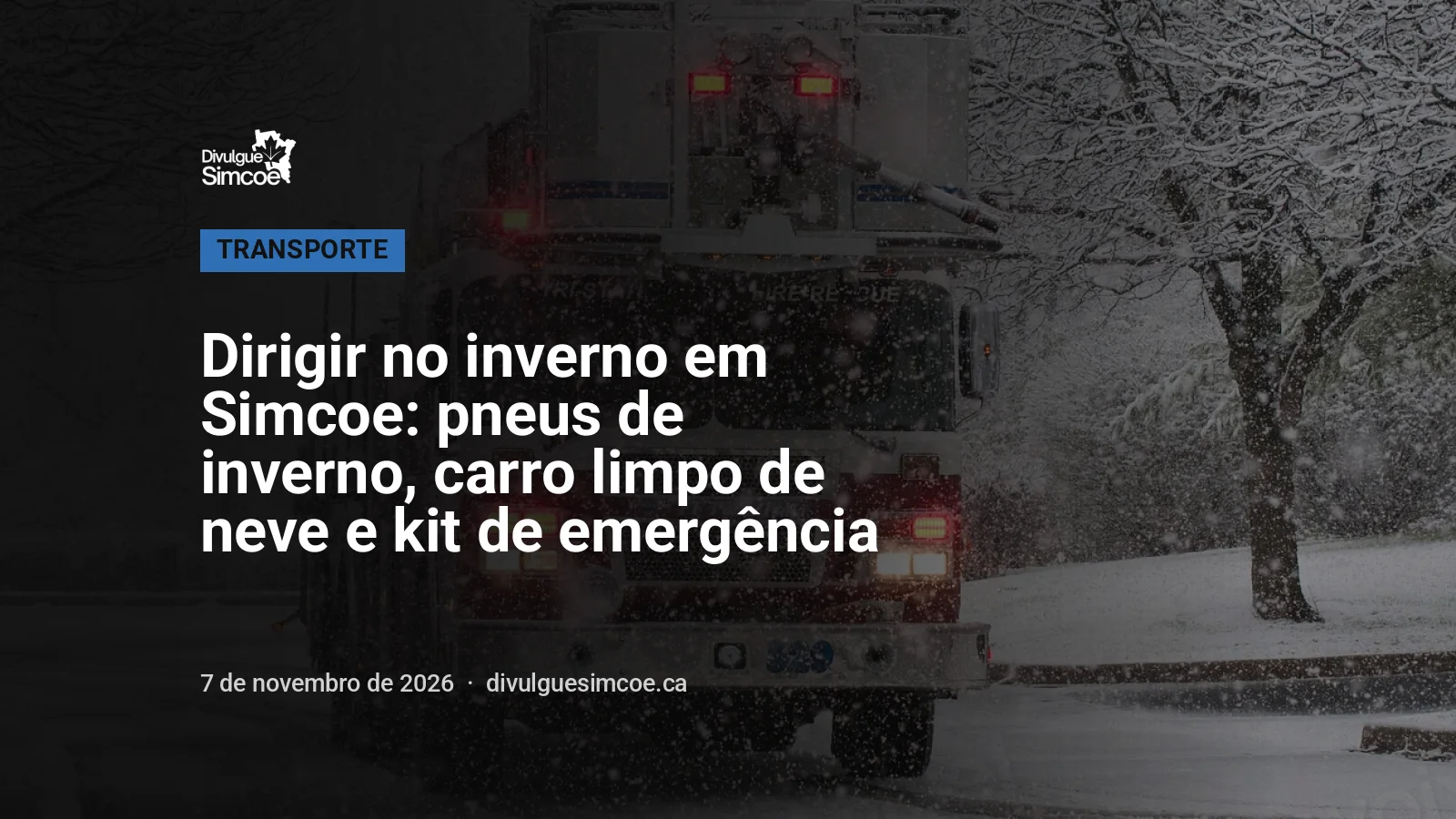
Anyone living in Barrie, Wasaga Beach, Collingwood or Midland soon learns a new expression: lake effect snow. Snow that forms over Georgian Bay and Lake Huron can fall heavily in narrow bands, cutting visibility within minutes on Highway 400, Highway 26 and rural roads. If this is your first or second winter in Canada, getting your car ready now makes all the difference.
Winter tires: not mandatory, but essential
In Ontario, winter tires are not required by law for passenger vehicles, but they are highly recommended. Their rubber stays soft in the cold and their treads are designed for snow and ice, so they brake much better than all-season tires. A few tips:
- Look for the mountain and snowflake symbol on the sidewall.
- Install them once temperatures stay below 7 °C, usually in November.
- Put on all four winter tires, never just two.
- Ontario insurers are required to offer a discount for winter tires. Call yours and ask.
- Studded tires are only allowed in Northern Ontario, not in Simcoe County.
Clear the whole car before you go
A small peephole in the windshield isn't enough. Ontario's traffic law requires a clear view through your windows, and police can fine drivers with snow-covered glass. Also clear the roof, hood and lights: a chunk of snow flying off your roof can cause a crash for the car behind you. A brush with an ice scraper is a must.
Build a car emergency kit
If you get stuck on the road during a storm, a kit can help until help arrives:
- small shovel, brush and ice scraper;
- sand or cat litter for traction if you get stuck;
- booster cables;
- blanket, hat, mittens and extra socks;
- flashlight with batteries, phone charger and water;
- non-perishable food such as granola bars;
- winter windshield washer fluid.
Before and during your trip
- Check 511 Ontario (website or app) for road conditions, cameras and plow locations.
- Keep your gas tank at least half full.
- Slow down and leave more space behind the car in front.
- Don't pass snowplows while they're working, and give them room.
- If visibility drops, slow down, turn on your lights and, if you must stop, pull off the road in a safe place.
- When you see emergency vehicles or tow trucks stopped with lights flashing, slow down and move over if it's safe, as Ontario law requires.
Winter street parking
Many towns in the region ban overnight street parking during the winter months to make snow clearing easier. Rules and hours vary from town to town, so check your municipality's website to avoid a ticket or tow.
Final tip
If you've never driven in snow, consider a practical lesson with a local driving school before the first storms. And on days with storm warnings, the best decision may be simply to stay home.
Need help with this? See mechanics, rentals and car washes in the guide, with the language of service on each profile.